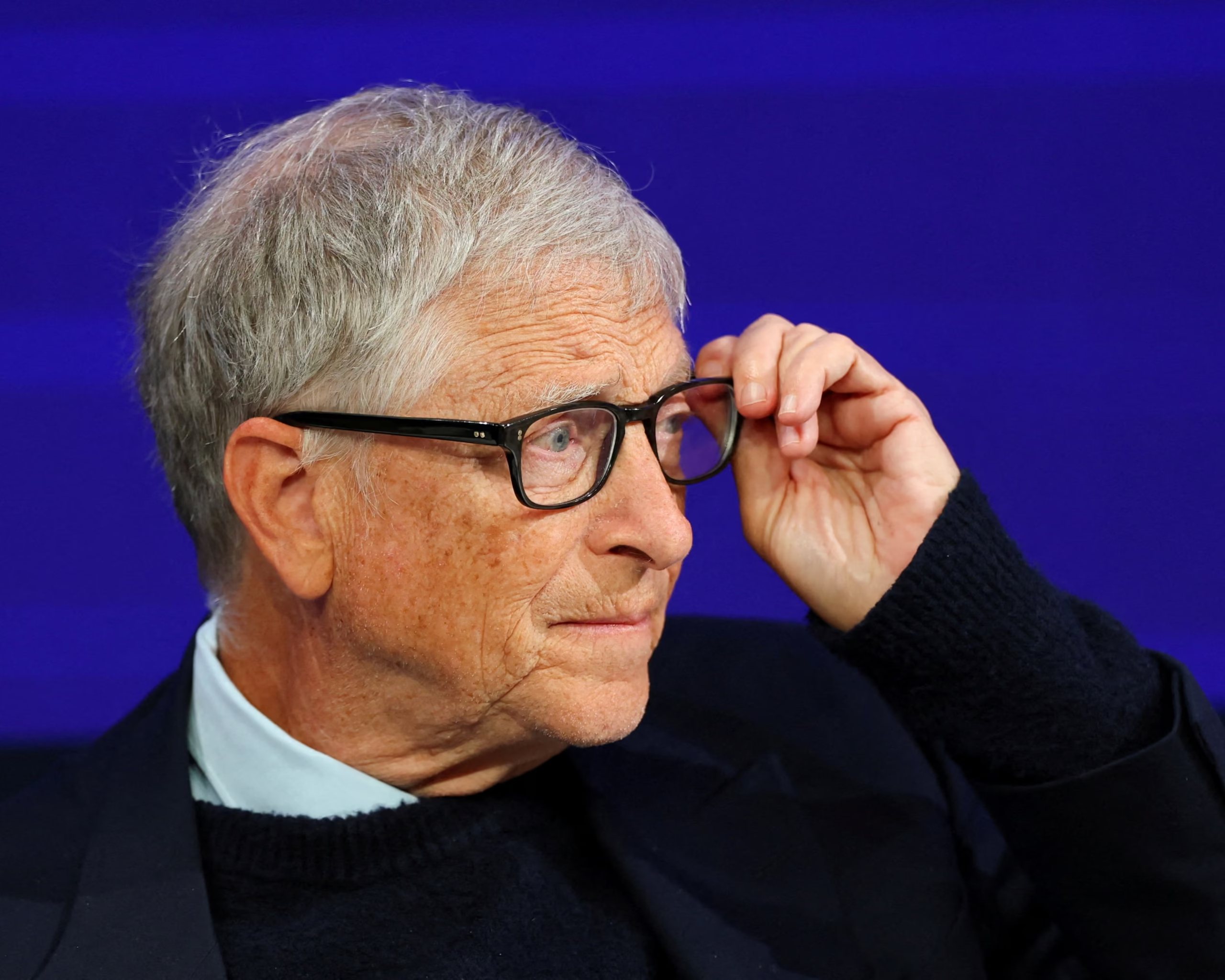
Bill Gates believes artificial intelligence will change society faster and more deeply than most people expect.
In his article, “The turbulent AI era is here,”, he explains both the good and bad sides of AI. His main message is simple: AI could make life much better, but only if governments and communities prepare for the problems it will create.
I agree with much of his argument. Gates clearly explains why AI is different from earlier technologies. However, his solutions need more detail.

AI may change every kind of work
People often compare AI to computers, the internet, or machines used in factories. Those inventions removed some jobs, but they also created new ones.
Gates believes AI will be different because it can do tasks that require thinking. It can read, write, speak, study information, and solve problems. In the future, robots may also perform many physical tasks.
This means AI could affect office and manual workers at the same time. Customer service agents, software developers, legal assistants, healthcare workers, and construction workers could all face major changes.
The speed of this change matters. Earlier economic changes happened over several generations. AI could transform many industries within ten years. Workers may have little time to learn new skills or find another career.
Gates also understands that losing a job is about more than losing money. Work can give people a daily routine, friendships, pride, and a feeling that they are useful. Financial support alone cannot replace all of that.
This is one of the strongest parts of his article.
Some work should stay human
Gates suggests that society should protect certain jobs from AI and robots. He calls this idea “Human Reserved.”
For example, a robot may eventually be able to care for an elderly person. But good care involves more than completing tasks. Human caregivers notice feelings and needs that a patient may struggle to explain.
The same idea could apply to teachers, therapists, and doctors giving patients terrible news. A machine may be able to do these jobs, but that does not mean we should allow it to do them alone.
This is an interesting proposal because it asks an important question: should we use AI everywhere simply because we can?
However, the idea would be difficult to put into practice. Who decides which jobs must remain human? How would governments stop companies from replacing workers? Would only wealthy people be able to afford human care?
Gates raises these questions but does not fully answer them.
AI could do a great deal of good
Gates is still hopeful about what AI can achieve.
It could help doctors find illnesses earlier and help patients understand their treatment. It could give farmers better information about weather, soil, and disease. It could help students learn at their own speed and allow teachers to spend more time with them.
AI could also make government services easier to use. People often struggle with long and confusing applications for food assistance, healthcare, or student support. AI could guide them through these systems.
These benefits are possible, but they will not happen automatically. Companies will usually build products for people and organizations that can pay for them. Poor communities may be left behind unless governments and charities take action.
Gates is right to focus on this danger.
The solutions are not strong enough yet
Gates proposes several responses. He wants governments to create new institutions for managing AI. He supports stronger financial help for displaced workers. He also suggests taxing robots and AI use so that replacing a worker is not always the cheapest choice.
These are useful ideas, but they do not fully match the size of the problem he describes.
If AI removes millions of jobs, small tax changes and training programs will not be enough. Governments will have to answer much bigger questions:
- Who will own the most powerful AI systems?
- Who will receive the money those systems generate?
- How will people support themselves if there is less paid work?
- Will workers and communities have the power to reject harmful uses of AI?
- How can we stop a few companies from controlling the technology?
Gates says that slowing AI development may be impossible because countries and companies are competing with one another. This may be true, but governments still have power. AI companies need computer chips, energy, data centers, investment, and legal permission. Public policy shapes all of these things.
The future of AI is not completely outside human control.
A useful warning
Gates’s article succeeds because it avoids two extreme positions.
He does not claim that AI will solve every problem. He also does not argue that AI will destroy everything. He believes it can create huge benefits and serious harm at the same time.
His most important point is that the benefits will not reach everyone by themselves. Society must make choices about how AI is built, who controls it, and where it should be used.
But those choices cannot be left mainly to technology companies, wealthy investors, or experts. Workers, parents, teachers, young people, and local communities need real power in the process.
Gates has written a strong warning about the difficult period ahead. He is right that we need to prepare now.
The next step is to decide who gets to shape that preparation—and whether ordinary people will have a real voice in the answer.